 PlantFun
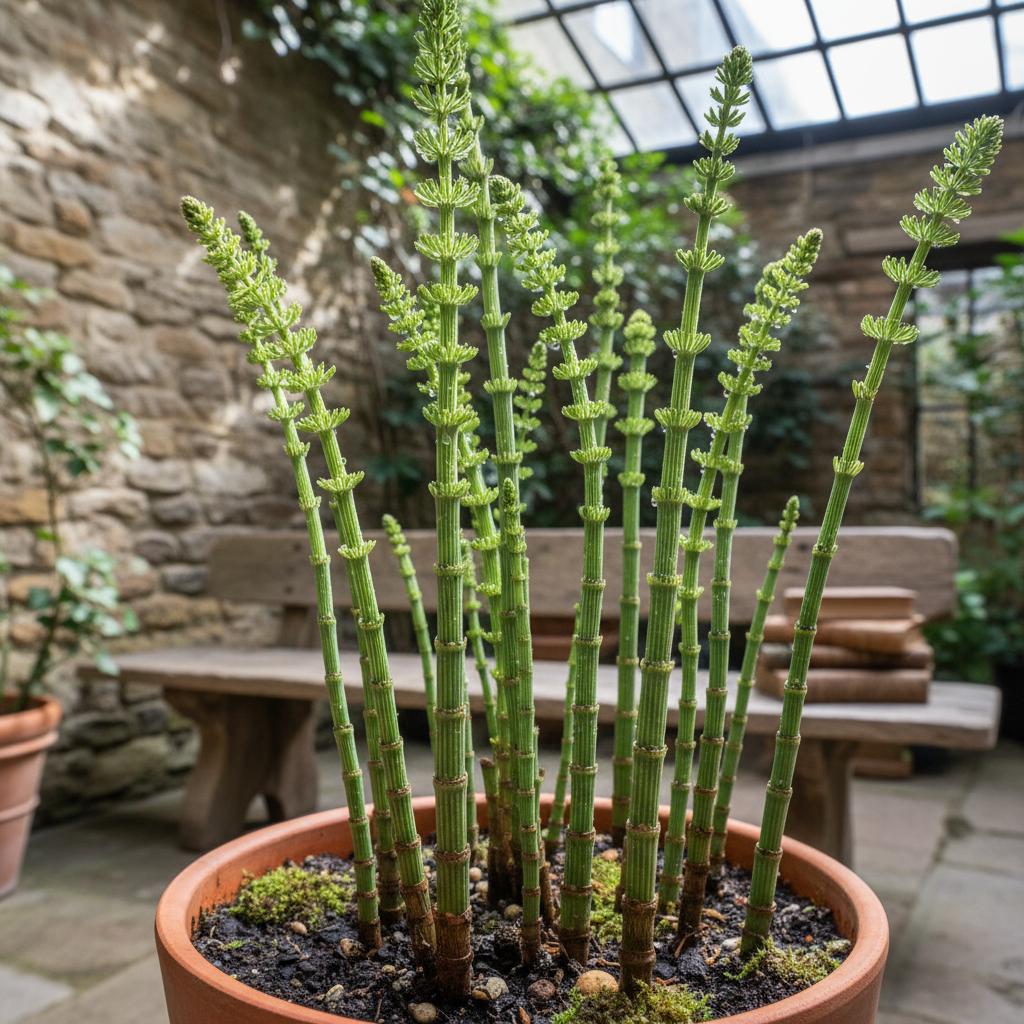
Variegated horsetail Toxic?
All parts of the plant are toxic, with alkaloid content remaining stable even after drying, so contaminated hay remains dangerous.
Horses are particularly susceptible, developing thiamine (Vitamin B1) deficiency that causes 'staggers disease'.
Early administration of Vitamin B1 is the only curative treatment for affected equines, especially in early disease stages.
FAQ
Is Variegated horsetail toxic to Humans?
No confirmed human poisoning reports documented, but ingestion is expected to cause gastrointestinal distress, dizziness and coordination issues. (Low)
Is Variegated horsetail toxic to Cats?
No specific toxicity data available, monitor for appetite loss, diarrhea, lethargy and unusual movement if ingested. (Low)
Is Variegated horsetail toxic to Dogs?
No specific toxicity data available, watch for vomiting, diarrhea, unsteadiness and neurological changes post-ingestion. (Low)
Is Variegated horsetail toxic to Horses?
Anorexia, weight loss, restlessness, progressive coordination loss, saw-horse stance, hindlimb paralysis, recumbency, blindness, muscle fasciculations post-exertion, opisthotonus, central seizures and death in severe cases. (High)
Toxicity Details
No confirmed human poisoning reports documented, but ingestion is expected to cause gastrointestinal distress, dizziness and coordination issues.
No specific toxicity data available, monitor for appetite loss, diarrhea, lethargy and unusual movement if ingested.
No specific toxicity data available, watch for vomiting, diarrhea, unsteadiness and neurological changes post-ingestion.
Anorexia, weight loss, restlessness, progressive coordination loss, saw-horse stance, hindlimb paralysis, recumbency, blindness, muscle fasciculations post-exertion, opisthotonus, central seizures and death in severe cases.
Toxicity Snapshot
First Aid & Prevention
First 30 Minutes
- • Remove all remaining plant material from the exposed animal's mouth and stop further access to the plant.
- • Administer activated charcoal if ingestion occurred within the last 2 hours to reduce toxin absorption.
- • Record the approximate amount ingested and time of exposure to share with your veterinarian.
Contact Vet Immediately
- • If the exposed animal shows appetite loss, diarrhea, uncoordinated movement or any neurological symptoms.
- • If the exposed animal is a horse, even if no symptoms are present immediately after ingestion.
- • If a large amount of the plant was consumed by any livestock or companion animal.
Prevention
- • Remove all Equisetum species from pastures and hay supplies intended for feeding livestock, especially horses.
- • Inspect all hay batches for horsetail contamination before feeding to equines and other herbivores.
- • Prevent livestock access to areas where wild variegated horsetail grows abundantly.
Treatment & Prognosis
- • Perform appropriate decontamination procedures as clinically indicated for the exposure timeline.
- • Administer oral Vitamin B1 (thiamine) at 100-200mg twice daily on the first day, then once daily for 7-14 days.
- • Provide targeted symptomatic and supportive care to address presented symptoms such as seizures or dehydration.
Professional Toxicology
• Piperidine alkaloids in the plant inhibit thiamine (Vitamin B1) function, leading to severe thiamine deficiency in equines.
• Total alkaloid content stays consistent when the plant is dried, so contaminated hay remains fully toxic.
• Alkaloid concentration is higher in above-ground plant tissues, and peaks in summer and late growth stages.
Information from CliniTox veterinary text.
The following plants look similar and may be confused:
Related Toxic Plants
Download PlantFun App
Identify, grow and care for plants effectively!
Instant Plant ID
Take a photo to quickly identify plants.
Smart Care Reminders
Generate watering and care schedules.
Toxicity & Disease Diagnosis
Identify toxic plants and pests with treatment advice.

Data Sources
This information is for reference only and does not constitute medical advice. If ingestion or poisoning is suspected, seek medical or veterinary attention immediately.