 PlantFun
Peacock Flower Toxic?
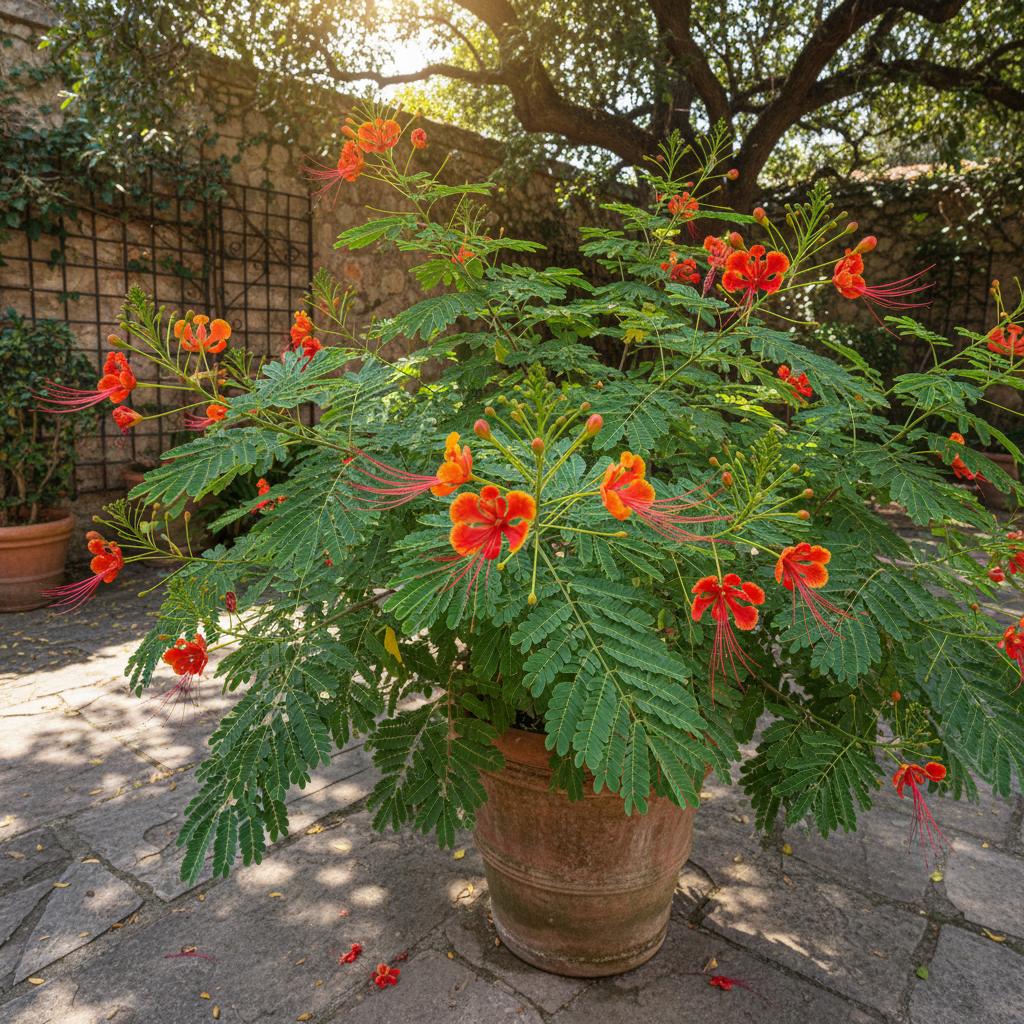
This plant is confirmed toxic to cats, dogs, and horses per ASPCA data.
Its core toxic compounds are gastrointestinal irritants and tannins.
Ingestion typically causes only mild to moderate digestive symptoms in affected animals.
FAQ
Is Peacock Flower toxic to Humans?
No confirmed clinical toxicity data for humans is available; seek medical care if large quantities are accidentally ingested. (Low)
Is Peacock Flower toxic to Cats?
Vomiting and diarrhea, per ASPCA clinical reports. (Low)
Is Peacock Flower toxic to Dogs?
Vomiting and diarrhea, per ASPCA clinical reports. (Low)
Is Peacock Flower toxic to Horses?
Vomiting and diarrhea, per ASPCA clinical reports. (Low)
Toxicity Details
No confirmed clinical toxicity data for humans is available; seek medical care if large quantities are accidentally ingested.
Vomiting and diarrhea, per ASPCA clinical reports.
Vomiting and diarrhea, per ASPCA clinical reports.
Vomiting and diarrhea, per ASPCA clinical reports.
Toxicity Snapshot
First Aid & Prevention
First 30 Minutes
- • Remove all remaining plant material from the affected animal's mouth immediately.
- • Rinse the animal's mouth with clean lukewarm water to eliminate residual plant matter.
- • Do not induce vomiting unless explicitly instructed to do so by a licensed veterinarian.
Contact Vet Immediately
- • The animal has ingested any quantity of Peacock Flower plant material.
- • Vomiting, diarrhea, lethargy, or abdominal pain appears after exposure.
- • Symptoms persist for more than 2 hours after initial onset.
Prevention
- • Keep Peacock Flower plants out of reach of pets and horses in indoor and outdoor spaces.
- • Confirm plant identification before planting in areas accessible to livestock or companion animals.
- • Train pets to avoid consuming unknown ornamental or wild plants.
Treatment & Prognosis
- • Veterinarians may administer activated charcoal to bind unabsorbed toxins in the digestive tract.
- • Supportive fluid therapy may be provided to address dehydration from vomiting and diarrhea.
- • Symptomatic anti-diarrheal or anti-nausea medication may be prescribed to reduce discomfort.
Professional Toxicology
• Tannins and GI irritants in the plant irritate the mucosal lining of the stomach and intestines, triggering localized inflammation and digestive symptoms.
Information from CliniTox veterinary text.
The following plants look similar and may be confused:
Related Toxic Plants


Download PlantFun App
Identify, grow and care for plants effectively!
Instant Plant ID
Take a photo to quickly identify plants.
Smart Care Reminders
Generate watering and care schedules.
Toxicity & Disease Diagnosis
Identify toxic plants and pests with treatment advice.

Data Sources
This information is for reference only and does not constitute medical advice. If ingestion or poisoning is suspected, seek medical or veterinary attention immediately.